Light roast
Often preserves more origin character, floral or fruity aromatics and brighter acidity. Light is not a fixed temperature or a guarantee of high caffeine. Roast color, development and the actual coffee matter.
Green and roasted coffee for cafés, roasters, offices and resellers. Wholesale price tiers are shown to signed-in business accounts; anyone can request a quote.
Roast, blend and taste — explore the craft behind your preferred cup.
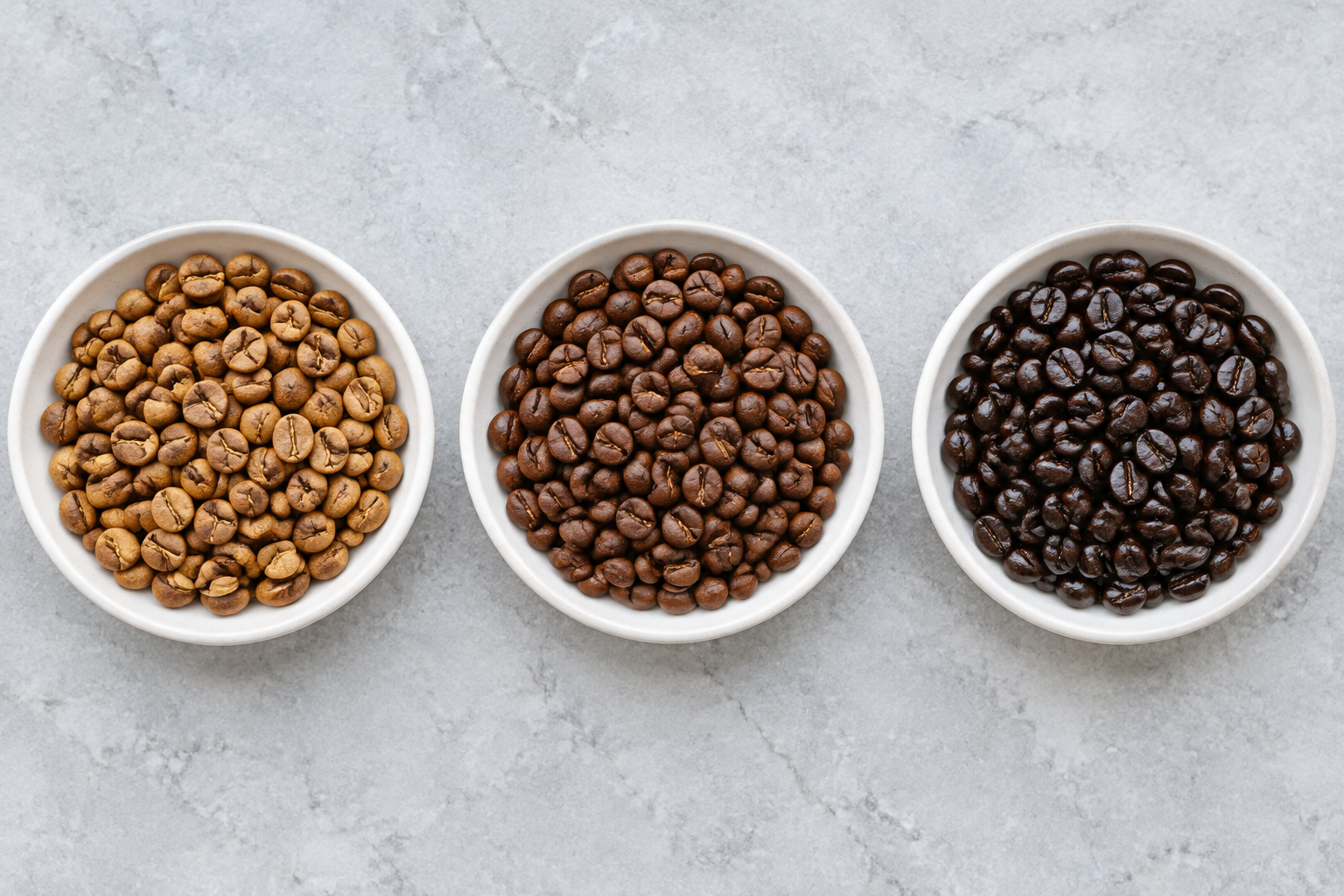
AI-generated origin illustrations — not photographs of listed farms or seller lots.
Often preserves more origin character, floral or fruity aromatics and brighter acidity. Light is not a fixed temperature or a guarantee of high caffeine. Roast color, development and the actual coffee matter.
Often balances origin character with caramel-like sweetness and rounded body. A useful starting point for chocolate or nut notes, but taste the particular lot rather than assuming a universal profile.
Often emphasizes roast-driven cocoa, toasted or smoky flavors and reduces perceived origin acidity. Surface oils can appear. Dark does not automatically mean more caffeine or higher beverage strength.
First crack is often observed around 196–205°C (385–401°F) on a bean-temperature probe; second crack may appear around 224–230°C (435–446°F). These are approximate observations, NOT appliance settings or guaranteed endpoints. Probe placement, calibration, roaster design, moisture and batch size change readings. Inlet, air, drum and bean temperatures are not interchangeable. Use the manufacturer’s instructions and trained supervision, not a universal temperature recipe.
Green beans progress through drying, yellowing and browning (including Maillard reactions), then first crack and development before prompt cooling. Time, heat transfer and airflow shape the outcome together. Record batch weight, temperature measurement type, crack events, roast color and tasting results. Provide ventilation, keep chaff systems clean and follow the equipment’s fire-safety instructions; never leave a running roaster unattended.
Ratios are percentages by weight. A 1,000 g trial at 70% Robusta + 30% Arabica uses 700 g Robusta and 300 g Arabica. Robusta often adds body and usually more caffeine; Arabica can contribute diverse aromatics and acidity. Quality and processing vary within both species. No ratio is universally best.
Aroma is what you smell; flavor integrates taste and aromatics; body is the tactile impression. Perceived acidity, sweetness and bitterness differ between coffees and brewing recipes. Strength means beverage concentration, not darkness or a percentage of Robusta. Keep dose, water, grind and extraction consistent when comparing blends.
For a chocolate-led cup, trial 60% Brazilian Arabica + 40% Colombian Arabica at medium roast. For a floral direction, trial 70% Ethiopian Arabica + 30% Colombian Arabica at light-to-medium roast. For a fuller-bodied espresso direction, compare 70% Robusta + 30% Brazilian Arabica against 30% Robusta + 70% Brazilian Arabica. These are starting hypotheses, not guaranteed flavors or rankings. Roast components separately when their needs differ, then blend cooled beans by weight. Taste small batches and adjust one variable at a time.
Educational suggestions, not machine operating instructions or guaranteed flavor results. Taste is subjective; validate each roast and blend with small trials.